I recently rebuilt Vibe Coding Academy from scratch for V2. The entire process took days instead of weeks.
Six months ago, this rebuild would have felt daunting, requiring careful planning, constant decision-making, and referencing countless past projects. Now? I simply follow personalized instructions inside Claude Code.
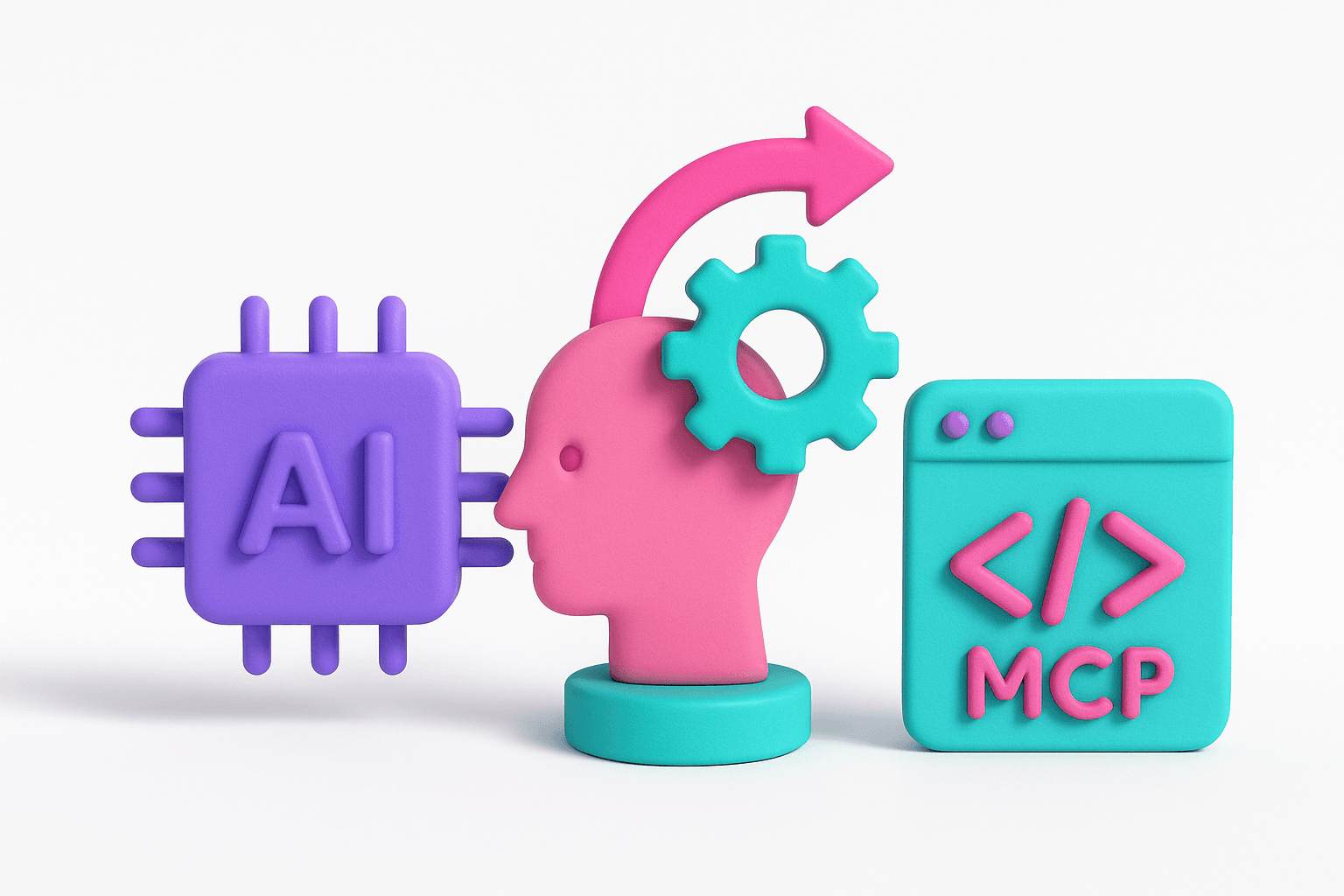
The difference isn't a new AI model or framework. It's years of building experience encoded inside Emily, Vibe Coding Academy's custom MCP (Model Context Protocol) for building production-ready applications.
If you're a product builder with years of expertise, you're sitting on an unfair advantage, but it's probably locked in your head or scattered across prompt libraries. Here's how to change that.
Key Takeaways
- Custom MCPs transform scattered expertise into systematically accessible knowledge that AI tools can leverage through natural conversation
- Traditional workflows require manually finding, adapting, and copy-pasting your proven methodologies for every project, MCP-powered workflows automate this entirely
- Product builders can encode design systems, PRD frameworks, content strategies, and technical architectures into custom MCPs for consistent, scalable output quality
- Building your first custom MCP is accessible through n8n's MCP node connected to a private GitHub repository containing your structured expertise
- The evolution from prompt libraries to custom MCPs represents a fundamental shift from manual adaptation to systematic expertise that compounds returns over time
Learn this hands-on
Go from idea to a live product with real users. Build and ship your first SaaS with Claude Code in a live cohort, with auth, payments and deployment done by the end. Join the Ship Your First SaaS with Claude Code cohort.
The Problem: Your Expertise Is Locked Away (And It's Costing You)
You've spent years developing expertise. Maybe it's:
- A design system that consistently produces high-converting interfaces
- A PRD methodology that eliminates scope creep
- A content framework that drives measurable engagement
- A technical architecture pattern that scales reliably
But where does this expertise live? In your head. Or worse, scattered across:
- Bookmarked articles you half-remember
- Notion databases you rarely reference
- Prompt libraries requiring constant copy-paste editing
- Slack messages from two years ago
- Google Docs titled "v3_FINAL_actually_final"
Every time you start a new project, you're reconstructing this knowledge from scratch. You're relying on memory instead of systems. You're manually adapting generic AI outputs instead of generating specialized ones from the start.
The opportunity cost is enormous. Not just in time, but in consistency, quality, and the ability to scale your impact as a product builder.
What Is a Custom MCP? (And Why It Changes Everything)
Model Context Protocol (MCP) is Anthropic's open standard for connecting AI assistants to external data sources and tools. Think of it as a bridge between Claude (or any LLM) and your specialized knowledge.
"Open technologies like the Model Context Protocol are the bridges that connect AI to real-world applications, ensuring innovation is accessible, transparent, and rooted in collaboration."
, Dhanji R. Prasanna, CTO at Block
A custom MCP lets you encode your expertise once, then access it naturally through conversational AI, no copy-pasting, no context-switching, no manual prompt editing.
Here's what makes custom MCPs powerful for product builders:
Traditional Workflow (Without MCP):
- Remember your methodology exists
- Find the relevant document
- Read and internalize the approach
- Manually adapt it to your current context
- Copy sections into your AI conversation
- Edit the AI output to match your standards
- Repeat for every project
MCP-Powered Workflow:
- Ask Claude to execute using your methodology
- Get outputs that automatically follow your proven framework
- Ship
The time savings compound. But more importantly, the quality becomes consistent. You're no longer dependent on whether you remembered that one crucial principle from your best project three years ago.
Open technologies like the Model Context Protocol are the bridges that connect AI to real-world applications, ensuring innovation is accessible, transparent, and rooted in collaboration.
Real-World Custom MCP Use Cases (Beyond Vibe Coding Academy)
The possibilities for encoding expertise into custom MCPs are genuinely endless. Here are proven use cases across different disciplines:
For Product Designers
Encode your UX/UI framework into a custom MCP:
- Design system components with specific spacing, typography, and color decisions
- Accessibility checklists tailored to your target compliance level
- User flow patterns that have proven successful in your domain
- Micro-interaction principles that align with your brand
Result: Every design decision automatically follows your proven principles. New designers on your team work at senior-level consistency from day one.
For Product Managers
Transform your PRD methodology into a custom MCP:
- Structured problem statement frameworks
- Your specific approach to defining success metrics
- Risk assessment templates based on your domain experience
- Stakeholder communication patterns that have worked
Result: Generate comprehensive PRDs using your exact framework directly from Claude Code. Maintain consistency across all product initiatives regardless of who's driving them.
For Copywriters and Content Strategists
Break down your conversion methodology into accessible steps:
- Hook formulas that resonate with your specific audience
- Value proposition structures tailored to your niche
- Call-to-action patterns optimized through your A/B testing history
- Voice and tone guidelines that capture your brand
Result: Produce on-brand, conversion-optimized content at scale without sacrificing the nuanced understanding that took years to develop.
For Technical Architects
Codify your architecture decisions:
- Database schema patterns for common use cases in your domain
- API design principles that have proven scalable
- Security implementation checklists
- Infrastructure-as-code templates that match your operational standards
Result: New projects start with battle-tested architectural decisions instead of reinventing approaches each time.
How to Build Your First Custom MCP (Practical Starting Point)
The technical barrier to creating a custom MCP is surprisingly low, especially if you're already familiar with specialized AI prototyping tools.
Recommended Approach for Product Builders:
Step 1: Start with n8n's MCP Node
n8n provides an MCP node that makes building custom MCPs accessible without deep protocol knowledge. It's the fastest path from concept to working implementation.
Step 2: Connect to a Private GitHub Repository
Store your expertise in a structured format within a private GitHub repo:
- Markdown files for methodologies and frameworks
- JSON for structured data (design tokens, configuration patterns)
- Code snippets for technical implementations
- Templates for common deliverables
Step 3: Define Clear Access Patterns
Structure your expertise so the AI can understand when and how to access it:
- Use clear naming conventions
- Add context headers to documents
- Create an index that maps use cases to resources
- Document the intended workflow for each piece of expertise
Step 4: Test and Iterate
Start with one well-defined use case:
- Encode one methodology completely
- Test it across multiple real projects
- Refine based on where the AI struggles or excels
- Gradually expand to additional expertise areas
Technical Note: You don't need to be a protocol expert to build effective custom MCPs. The n8n approach abstracts the complexity while still giving you the core benefits. For a deeper dive into MCPs inside Claude Code, watch our lesson on advanced MCP usage.
The Unfair Advantage: Your Expertise Becomes Portable
Here's what changes when your expertise lives in a custom MCP instead of your head:
Consistency at Scale: Your best thinking applies to every project, not just the ones where you remember to reference it.
Onboarding Acceleration: New team members gain access to your expertise without years of osmosis.
Cross-Tool Availability: As MCP adoption grows, your encoded expertise works across different AI tools, not just Claude.
Compounding Returns: Each refinement to your methodology automatically improves every future application.
Reduced Context Switching: Stop juggling between documentation systems and AI conversations. Everything lives in one natural interface.
This is the real power of custom MCPs for product builders: your expertise becomes your unfair advantage across any AI tool.
Not just productivity gains, genuine competitive differentiation that compounds over time.
From Prompt Libraries to Systematic Expertise
The evolution from scattered prompts to systematic expertise looks like this:
Stage 1: Manual Prompting You craft each prompt from scratch based on what you remember.
Stage 2: Prompt Libraries You maintain a collection of proven prompts. Copy, paste, edit, repeat.
Stage 3: Custom Instructions You set global context for your AI tool. Better, but still generic.
Stage 4: Custom MCP Your expertise is encoded, structured, and accessible through natural conversation. The AI understands your methodology, your standards, your proven patterns.
Most product builders are stuck between stages 2 and 3. Custom MCPs represent a fundamental leap to stage 4.
What Expertise Should You Encode First?
Not all expertise is equally valuable to encode. Start with knowledge that meets these criteria:
High Reuse Frequency: You apply this knowledge multiple times per month across different projects.
Clear Structure: The expertise can be broken down into definable steps, principles, or patterns.
Proven Results: You have evidence this approach consistently produces better outcomes than alternatives.
Hard to Remember Perfectly: There are enough nuances that you sometimes miss details when working from memory.
Transferable Value: Other people (or your future self) would benefit from accessing this expertise.
Common examples that meet these criteria:
- Your specific approach to competitor research
- The design system that evolved from your best projects
- Your framework for prioritizing feature requests
- The architecture pattern you use for specific application types
Start Building Your Custom MCP Today
The technical barrier is low. The strategic value is enormous.
Here's your immediate action plan:
- Identify your most valuable repeatable expertise (one specific methodology or framework)
- Document it explicitly in a markdown file with clear structure
- Set up a private GitHub repository to store this expertise
- Use n8n's MCP node to create your first custom MCP connection
- Test it on your next real project and iterate based on results
You've spent years developing expertise that gives you an edge. Stop leaving it locked in your head or scattered across tools.
Encode it once. Access it everywhere. Compound the returns. If you want to master the entire Claude Code workflow, from custom commands to MCPs and agents, explore the complete Claude Code series.
What expertise will you encode first? Your answer to that question might become your biggest competitive advantage as a product builder in the AI era.
To learn more about systematic approaches to product building with AI, explore our comprehensive guides on building professional prototypes with AI tools and understanding what vibe coding really means.