Loading...
Free
Train your team on Claude Code here
📘Free Playbook
The AI Product Operating Systemfor Product Leaders
The playbook for Heads of Product, CPOs, and Product Leads who want to shorten the product lifecycle without growing the team. 6 layers, concrete workflows, ready-to-use checklists.
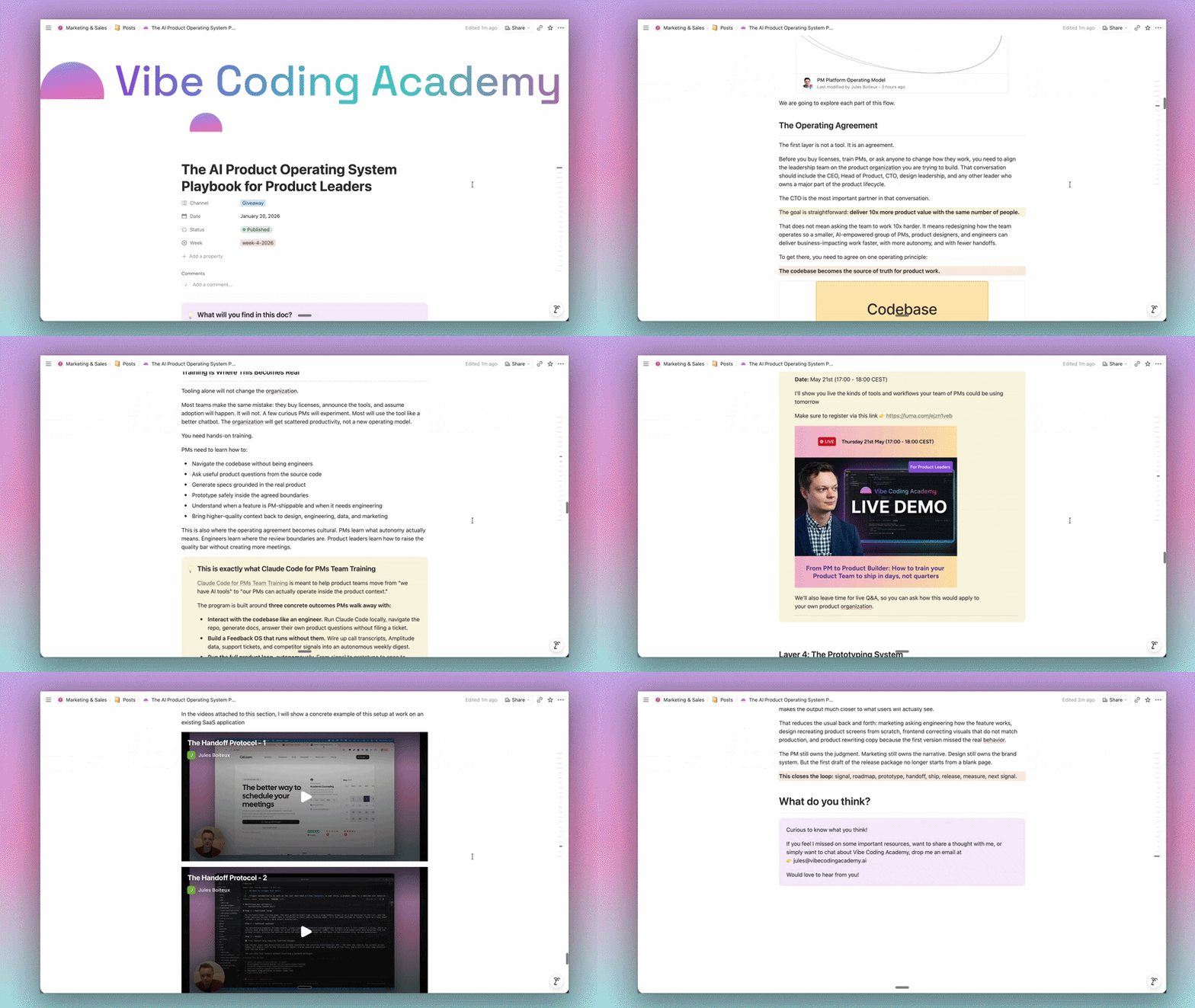
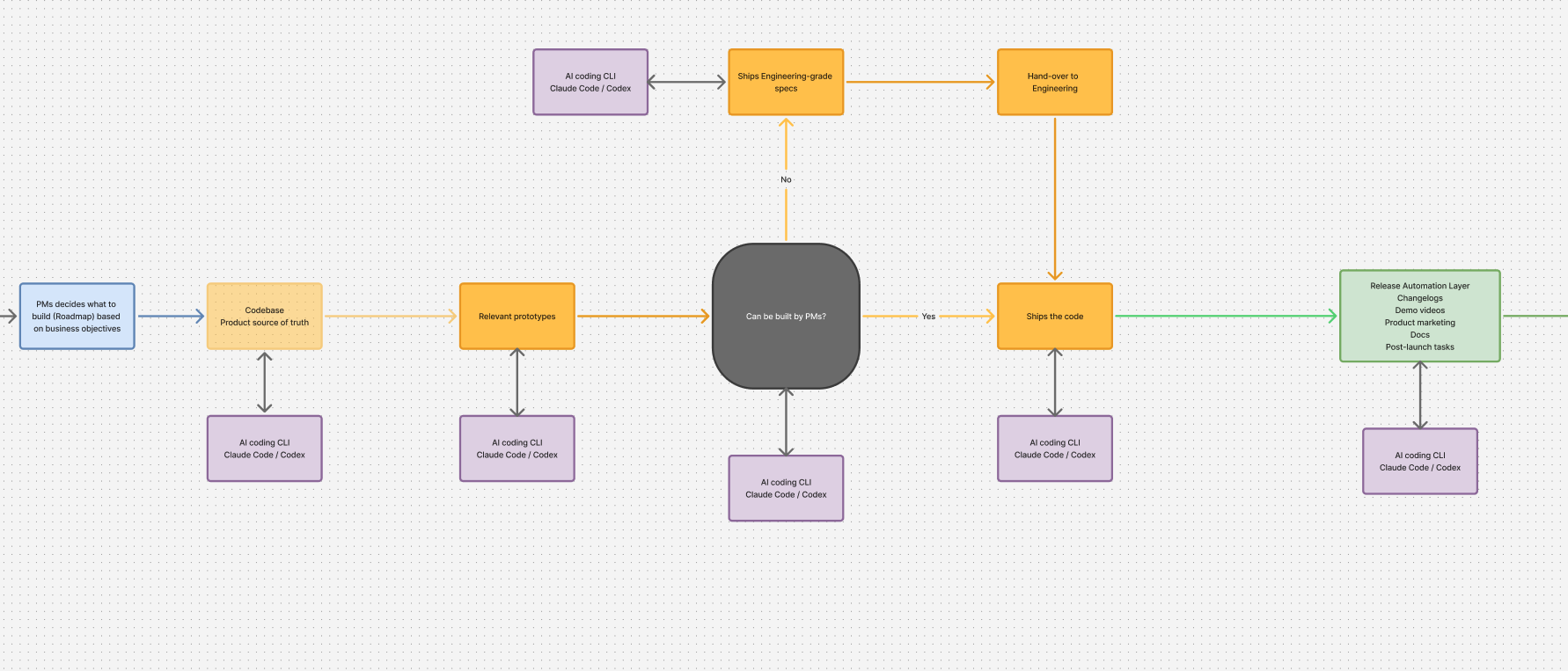
The 6-layer operating system
What's Inside the Playbook
A practical operating model to turn your PM team into an autonomous, AI-empowered product organization
Leadership Operating Agreement
The CTO-aligned principle that unlocks PM autonomy: making the codebase the source of truth for product work — without turning PMs into engineers
Tooling Layer + Checklists
The two foundations every PM needs (sandbox/local environment, AI coding CLI license), with concrete checklists to align with engineering and security
The Autonomous Feedback OS
A weekly digest that pulls signals from Amplitude, call transcripts, support tickets, and competitor pages — so PMs walk into Monday already informed
3 Prototyping Workflows
Codebase-to-Figma, low-fidelity-to-working-product, and branch-based prototyping — so PMs can react to grounded artifacts instead of blank pages
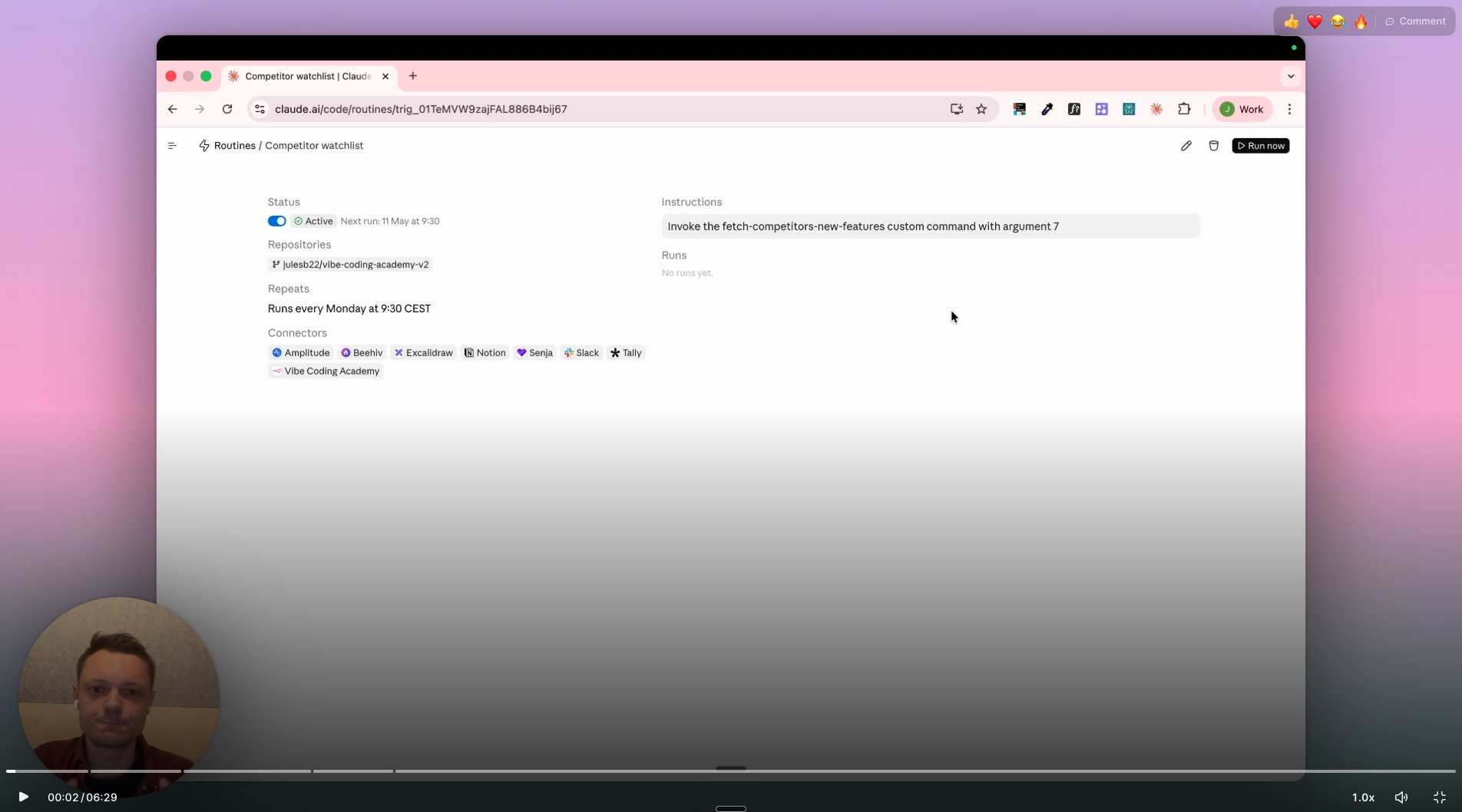
One of several walkthroughs included in the playbook
The 6 Layers
Each layer pairs a leadership decision with a concrete workflow your PMs can run this quarter
1
Layer 1
The Operating Agreement
The leadership conversation that aligns the CEO, Head of Product, and CTO around a single principle: the codebase becomes the source of truth for product work.
How to frame the 10x-with-the-same-headcount conversation
Where the boundary sits between PM autonomy and engineering review
Why CTO alignment is the hardest and most important step
2
Layer 2
The Tooling Layer
The two foundations every PM needs: a safe local or sandbox environment, and a license for an AI coding CLI like Claude Code or Codex.
8-point checklist to scope a safe sandbox with engineering
6-point checklist for AI coding CLI rollout (security, permissions, project memory)
Why tooling without training fails — and what hands-on training looks like
3
Layer 3
The Autonomous Feedback OS
Recurring agents that pull customer, product, and market signals on a schedule, so PMs start every week with the context they need to decide.
3 starter agents: usage data, call transcripts, competitor watchlist
MCP connections for Amplitude, Granola, Intercom, Notion, and more
How to combine outputs into a single weekly digest
4
Layer 4
The Prototyping System
Three concrete workflows that turn signals into grounded prototypes — so design and engineering react to something real, not a blank Figma file.
Codebase-to-Figma: prototypes that respect the production design system
Low-fidelity UX to working product: bridge from sketch to clickable
Branch-based prototyping inside the real codebase
5
Layer 5
The Handoff Protocol
A repeatable rule for what PMs ship end-to-end vs what becomes a stronger engineering spec — automated with a 'lead-dev-validator' agent.
Default boundary: frontend-only PRs vs backend-impacting handoffs
The validator agent that classifies each prototype
How to upgrade the PM-to-engineering conversation
6
Layer 6
The Release Automation Layer
Skills and subagents that turn merged PRs into changelogs, launch emails, demo scripts, and product-accurate visuals — drafted from the codebase itself.
What goes in the auto-generated release package
Why product-accurate marketing reduces rework with engineering
Where the PM, design, and marketing roles still own judgment
A Concrete Example: The Handoff Protocol
How a PM decides what to ship end-to-end vs. what becomes a stronger engineering spec — Layer 5
Default boundary: frontend-only changes can be PM-owned PRs; anything touching the backend, database, permissions, production data, or core architecture moves into an engineering handoff
The decision rule lives inside the codebase as a lead-dev-validator skill, custom command, or subagent — not in a policy doc nobody reads
The validator reviews each prototype and asks: does this need a new API, a DB migration, permission changes, data reconciliation, or shared-service impact?
Frontend-only outcome: the PM creates a branch, implements the change, and opens a PR for engineering review
Backend-impacting outcome: the PM doesn't ship end-to-end, but hands engineering a grounded prototype, a first spec, the affected areas, and the open technical questions
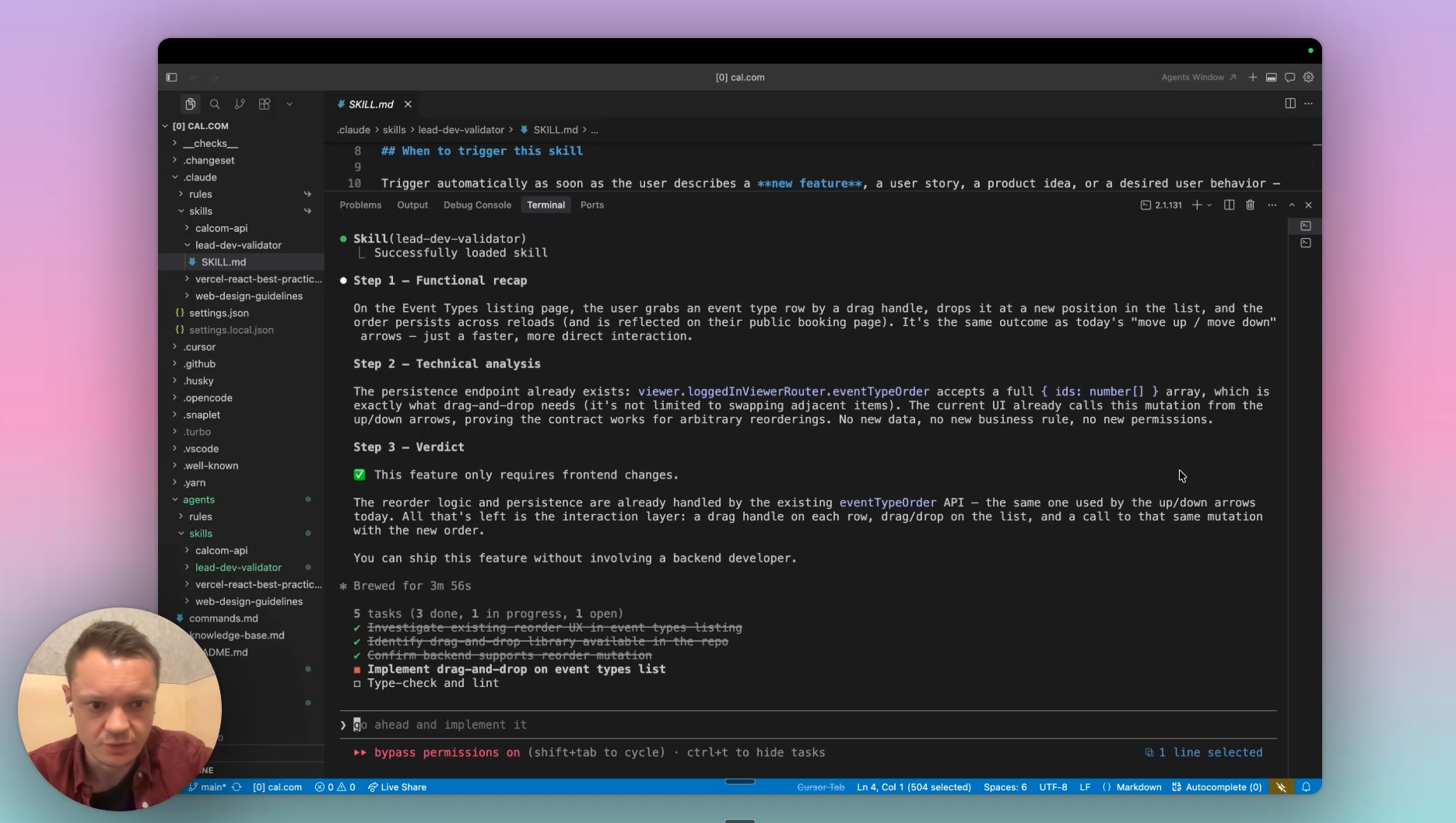
The conversation upgrades from "can you tell me if this is feasible?" to "here's the prototype, here's how it maps to the existing product, and here are the questions I need your judgment on."
Want to roll this out across your PM team?
The playbook gives you the operating model. Claude Code for PMs Team Training is where your PMs actually learn to operate inside the codebase, build the Feedback OS, and run the full product loop autonomously.
Team Training
Claude Code for PMs Team Training
Hands-on training that turns "we have AI tools" into "our PMs can operate inside the product context." Two formats: a 3-day cohort with personalized assignments, or a 1-day bespoke workshop built around your team's stack.
Cohort or bespoke1–3 days
Get the Playbook — It's Free
Enter your email and we'll send the playbook straight to your inbox.